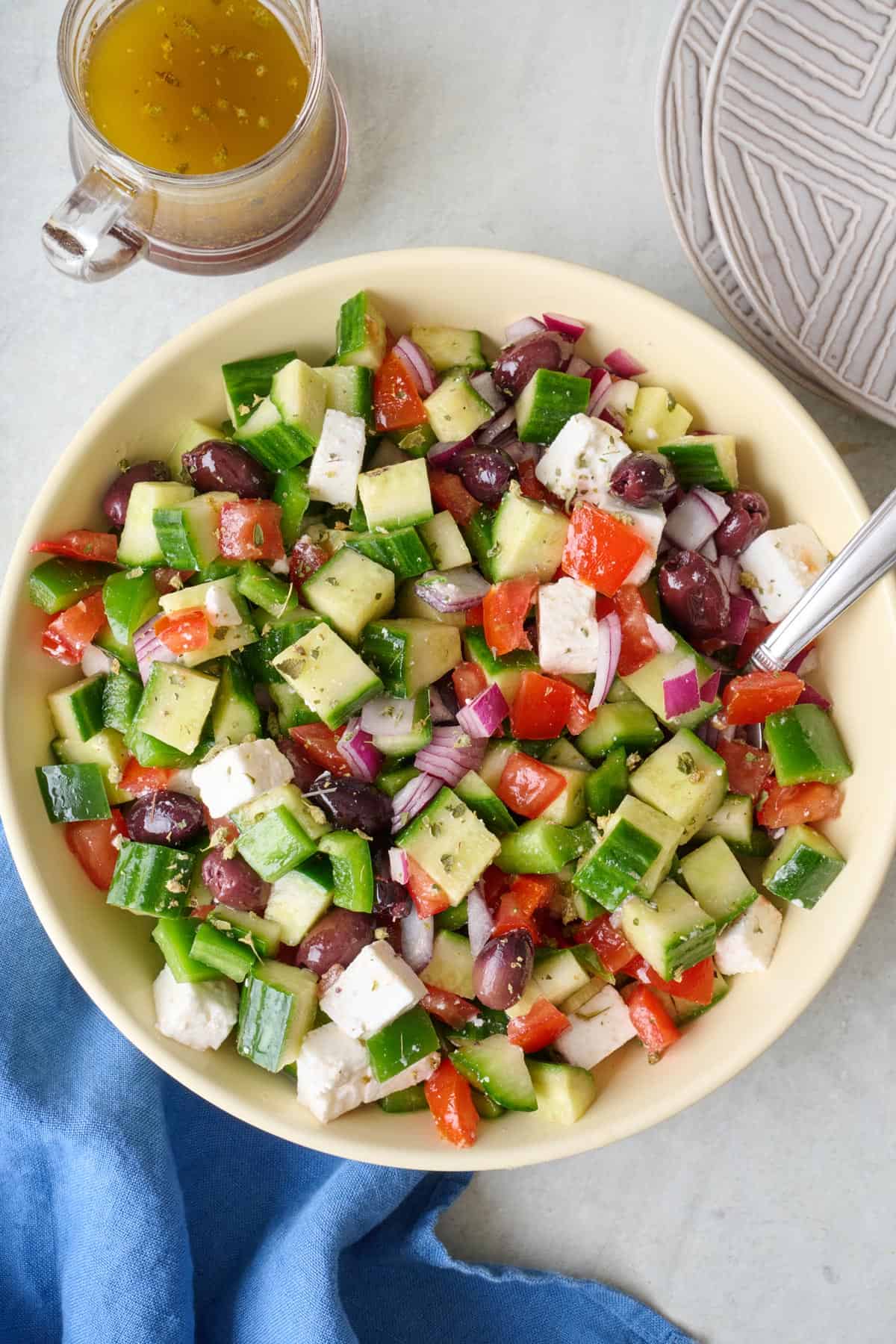
Master the Simple Greek Salad: Fresh Ingredients, Easy Steps
There’s a certain magic in simplicity, especially when it comes to food. Few dishes embody this philosophy as perfectly as the traditional Greek salad, or
Horiatiki Salata, as it’s known in its homeland. Forget the lettuce-laden versions you might find elsewhere; a true Greek salad is a vibrant celebration of peak-season produce, robust flavors, and minimal fuss. If you’ve ever yearned to recreate that authentic Mediterranean taste at home, you’re in the right place. This guide will show you how to master the art of making a truly exceptional
simple homemade Greek salad, ensuring every bite transports you straight to the sun-drenched tavernas of the Aegean.
Inspired by countless meals savored on the Greek islands, where every family-run eatery offered its unique, yet fundamentally uncomplicated, take on this classic, we’ve distilled its essence into an easy-to-follow recipe. It’s a testament to the fact that with just a handful of fresh, high-quality ingredients, a generous pour of extra virgin olive oil, a sprinkle of oregano, and a splash of vinegar, you can create an iconic dish that is both satisfying and incredibly refreshing.
The Essence of a True Greek Salad: Beyond the Lettuce
What truly defines a
Horiatiki, or "village salad," is its elegant simplicity and unwavering commitment to fresh, whole ingredients. Unlike many Americanized interpretations, a traditional Greek salad famously contains absolutely
no lettuce. This isn't an oversight; it's a deliberate choice that allows the star components—crisp cucumbers, sweet tomatoes, pungent red onion, earthy green bell peppers, briny Kalamata olives, and creamy feta—to shine without dilution.
This focus on core ingredients makes it one of the best ways to enjoy the bounty of the seasons, particularly from early spring through autumn. Think of it as the Mediterranean cousin to Italy’s Caprese or Bulgaria’s Shopska salad: a humble yet iconic table salad that relies entirely on the quality and ripeness of its produce. It’s a dish that proves that sometimes, the fewer ingredients, the more profound the flavor. The absence of lettuce also contributes to its robust texture, making it a satisfying side or a light meal on its own. For more on this traditional approach, delve into
Traditional Greek Salad: No Lettuce, Just Simple Freshness.
Unveiling the Star Ingredients for Your Simple Homemade Greek Salad
Creating the perfect
simple homemade Greek salad begins with selecting the finest ingredients. Each component plays a crucial role in the overall flavor profile and texture, so choose wisely.
Tomatoes: The Sweet Heart
For the best results, opt for
vine-ripe tomatoes or Roma tomatoes. They offer a perfect balance of sweetness and acidity, and their firmer texture holds up well against the crunchier vegetables. Avoid watery, pale tomatoes; seek out those that are plump, heavy for their size, and deeply colored.
Cucumber: The Crisp Refresher
English cucumbers are ideal here due to their sweeter flavor and minimal seeds. They also have a thinner skin, often requiring only partial peeling (a charming striped pattern is traditional and adds visual appeal). If using standard slicing cucumbers, you may want to fully peel their thicker, waxier skin to ensure a pleasant bite.
Red Onion: The Pungent Kick (Mellowed)
A thinly sliced red onion adds a crucial bite and a touch of sweetness. To soften its raw pungency, a quick soak in ice water with a dash of red wine vinegar can work wonders. This simple trick makes the onion milder and more palatable, allowing its flavor to complement rather than overpower the other ingredients.
Kalamata Olives: The Briny Jewels
These dark, almond-shaped olives are a cornerstone of traditional Greek cuisine. Their distinct fruity, salty, and slightly wine-like flavor is irreplaceable. Always choose good quality, pitted or unpitted Kalamata olives. While other high-quality olives can work in a pinch, Kalamatas deliver that authentic taste.
Green Bell Pepper: The Earthy Crunch
Traditionally, a
simple homemade Greek salad features only green bell pepper. Its slightly bitter, earthy notes provide an excellent contrast to the sweetness of the tomatoes and the richness of the olive oil. Slice it into rings or thin strips for visual appeal and an enjoyable crunch. Of course, if you prefer the sweeter taste of red, yellow, or orange bell peppers, feel free to adapt.
Feta Cheese: The Salty Crown
This is where quality truly matters. Seek out a block of authentic Greek sheep’s milk feta packed in brine. This type of feta is creamier, tangier, and saltier than crumbled varieties, which often contain anti-caking agents and lack the nuanced flavor. Large, satisfying chunks of feta, often placed generously on top, are a hallmark of a true
Horiatiki. While crumbled feta can be used in a pinch, a block allows for those iconic, rustic pieces.
Extra Virgin Olive Oil: The Golden Elixir
This isn't just a dressing; it's an ingredient. Use a high-quality, full-flavor Greek extra virgin olive oil. Its fruity, peppery notes will bind all the flavors together and provide that unmistakable Mediterranean richness. Don't skimp here—it makes a world of difference!
Red Wine Vinegar: The Tangy Spark
A dash of red wine vinegar provides the necessary acidity to balance the richness of the olive oil and the sweetness of the vegetables. It helps create a simple, no-whisk vinaigrette right in the bowl. While untraditional, a squeeze of fresh lemon juice can also work if you prefer.
Seasoning: The Aromatic Finish
Simplicity reigns supreme here: a generous sprinkle of dried Greek oregano and a pinch of kosher salt are all you need. The oregano adds an aromatic, earthy note that is quintessentially Greek.
For a deeper dive into the traditional preparations, check out our guide on
Easy Homemade Greek Salad: Authentic Horiatiki Recipe.
Crafting Your Simple Homemade Greek Salad: Step-by-Step Perfection
Making this salad is incredibly straightforward, requiring minimal cooking and maximum assembly. Here’s how to bring your
simple homemade Greek salad to life:
- Mellow the Onion (Optional but Recommended): Halve and thinly slice one red onion into delicate half-moons. To reduce its raw bite, place the slices in a small bowl filled with ice water and add about 1 teaspoon of red wine vinegar. Let them soak for 10-15 minutes while you prepare the other vegetables. Drain thoroughly before adding to the salad.
- Prep the Veggies:
- Slice 4 medium, ripe tomatoes into rustic, bite-sized wedges or chunks.
- Partially peel one English cucumber (creating a striped pattern), then slice it into half-moons about 1/2 inch thick.
- Slice 1 green bell pepper into thin rings or strips.
- Assemble with Care: In a large serving bowl, combine the prepped tomatoes, cucumber, drained red onion slices, and green bell pepper. Add a generous handful (about 1/2 cup) of Kalamata olives.
- Dress Simply: Drizzle generously with 1/4 to 1/2 cup of high-quality extra virgin olive oil, depending on your preference. Follow with 1-2 tablespoons of red wine vinegar.
- Season and Top: Sprinkle with about 1 teaspoon of dried Greek oregano and a pinch of kosher salt. Finally, place a glorious block of feta cheese on top of the salad, either whole or broken into large, rustic pieces.
- Serve Immediately: Toss gently just before serving to coat everything in the dressing and seasoning. The beauty of this salad is its fresh appeal.
Tips & Tricks for Elevating Your Simple Homemade Greek Salad
Even with a dish as simple as this, a few extra insights can make your
simple homemade Greek salad truly shine:
- Don't Premix the Dressing: One of the charms of a true Horiatiki is that the olive oil and vinegar are added directly to the vegetables and emulsify slightly as you toss. There’s no need for a separate whisked vinaigrette.
- Seasoning is Key: Taste your tomatoes before adding salt. If they're particularly sweet, a little extra salt will enhance their flavor. Always use dried Greek oregano, as its flavor is more robust and authentic than fresh in this context.
- The Feta Experience: If you've only ever had crumbled feta, treating yourself to a block of authentic Greek feta in brine will be a revelation. Its creamy texture and intense flavor are unparalleled.
- Serving Suggestions: This salad is incredibly versatile. It pairs beautifully with grilled chicken, fish, lamb, or simply a crusty loaf of bread to soak up the delicious olive oil and tomato juices. It also makes a fantastic light lunch on its own.
- Make Ahead? Handle with Care: While best enjoyed fresh, you can prep the vegetables and keep them separate in the fridge. Add the olives, feta, olive oil, vinegar, and seasonings just before serving to prevent the vegetables from becoming soggy.
- Embrace Imperfection: Traditional Greek salads are rustic. Don't worry about perfectly uniform cuts. The charm lies in the slightly varied sizes and shapes of the fresh produce.
Conclusion
There you have it: the definitive guide to crafting a truly authentic and incredibly delicious
simple homemade Greek salad. This isn't just a recipe; it's an invitation to experience the vibrant, wholesome flavors of Greece right in your own kitchen. By focusing on fresh, high-quality ingredients and embracing the philosophy of "less is more," you can create a dish that is both easy to prepare and profoundly satisfying. So, gather your produce, pour that golden olive oil, and savor the taste of the Mediterranean. You'll soon discover why this timeless classic remains a beloved staple around the world. Enjoy!