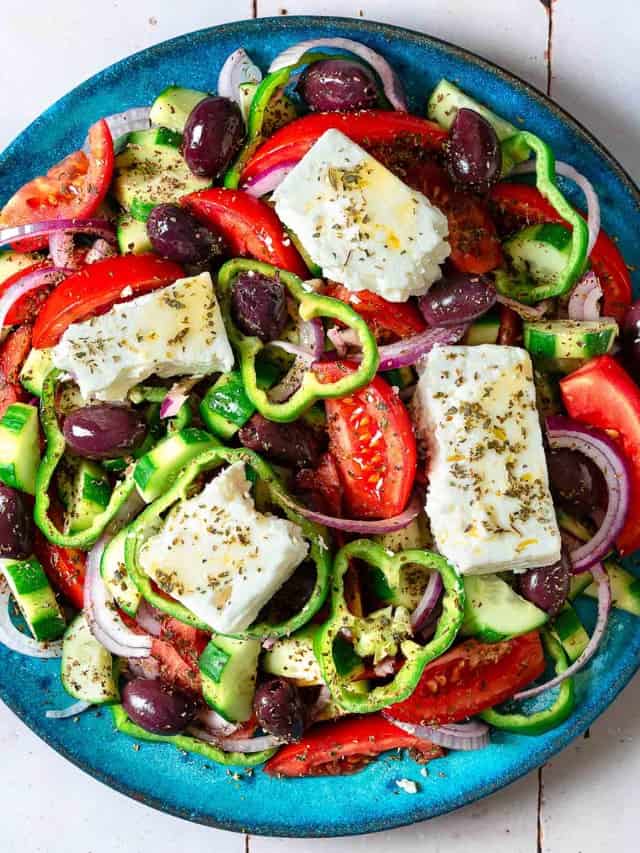
Traditional Greek Salad: No Lettuce, Just Simple Freshness
Imagine the warm Mediterranean sun, the gentle lapping of waves against an island shore, and the irresistible aroma of fresh produce. This is the essence of Greece, and it's perfectly encapsulated in one of its most beloved culinary treasures: the traditional Greek Salad, known locally as Horiatiki Salata, or simply "village salad." For many outside of Greece, the idea of a Greek salad conjures images of crisp lettuce, but here's a delicious secret: an authentic, simple homemade Greek salad contains not a single leaf of it. Instead, it celebrates a vibrant medley of farm-fresh vegetables, briny olives, tangy feta, and a generous drizzle of golden olive oil.
This iconic dish is a testament to the power of simplicity, proving that when ingredients are fresh and of high quality, very little is needed to create something extraordinary. It's a journey back to the humble tavernas of islands like Patmos and Kos, where every family-run establishment proudly serves its unique, yet fundamentally uncomplicated, version. Once you experience a true simple homemade Greek salad, your perception of salads will be forever changed. It’s an easy, authentic, fresh, and absolutely delicious experience that you can effortlessly recreate in your own kitchen.
Unveiling the True Traditional Greek Salad (Horiatiki)
The "no lettuce" rule is the first and most striking revelation for many discovering the traditional Greek salad. Unlike its Americanized counterparts, Horiatiki doesn't rely on leafy greens as a base. This isn't an oversight; it's a deliberate choice rooted in tradition and the celebration of core seasonal produce. The focus is squarely on the robust flavors and varied textures of ripe tomatoes, crunchy cucumbers, sharp red onions, earthy green bell peppers, and the unmistakable brininess of Kalamata olives, all crowned with a glorious slab of Greek feta.
Served most often from early spring through summer and into mid-fall, the Horiatiki is a quintessential warm-weather dish. Much like Bulgaria's Shopska salad or Italy's Caprese, this classic table salad uses just a few humble ingredients, yet it has become an iconic dish beloved around the world. It’s truly the best use of the season’s bounty, allowing each component to shine without being overshadowed. This approach ensures that every bite is bursting with natural sweetness, a satisfying crunch, and a delightful tang that is both refreshing and deeply satisfying. Learning to Master the Simple Greek Salad: Fresh Ingredients, Easy Steps is truly a culinary revelation.
The Pillars of a Perfect Simple Homemade Greek Salad: Essential Ingredients
The beauty of a simple homemade Greek salad lies in its reliance on high-quality ingredients. There's no hiding behind elaborate dressings or complex preparations; each component must stand on its own. Here's what goes into an authentic Horiatiki and tips for selecting the best:
- Tomatoes: Opt for ripe, juicy, vine-ripe tomatoes or Roma tomatoes. Their firmness ensures they hold up well, providing a substantial bite that complements the other crunchy vegetables. Tip: Always store whole tomatoes at room temperature to preserve their flavor and texture.
- Cucumber: English cucumbers are often preferred for their sweeter taste and fewer seeds, eliminating the need for extensive peeling. If using standard slicing cucumbers, be sure to fully peel their waxy skin. Partially peeling in a striped pattern adds an appealing visual touch.
- Onion: Red onion is the traditional choice due to its mild sweetness. To further mellow its raw pungency, a quick soak in ice water with a dash of red wine vinegar works wonders.
- Olives: Briny Kalamata olives are the gold standard for their rich, fruity, and slightly smoky flavor. Seek out good quality, whole olives, often identifiable by their deep purple hue and almond shape. Any high-quality olive packed in brine can work in a pinch.
- Bell Pepper: An authentic Greek salad strictly calls for green bell pepper. Its slight bitterness and crisp texture are integral to the salad's balance. While other colors can be used, sticking to green will give you the most traditional flavor profile.
- Feta Cheese: This is non-negotiable! Look for whole blocks of Greek sheep’s milk feta packed in brine. The briny liquid keeps the feta moist and flavorful. Crumble it generously over the salad or, more traditionally, place a large, satisfying slab directly on top. Pre-crumbled feta can be a convenient substitute but often lacks the same creamy texture and robust flavor.
- Extra Virgin Olive Oil: The lifeblood of the Greek salad. Use a full-flavor, high-quality Greek extra virgin olive oil. Its rich, peppery notes tie all the ingredients together, acting as a simple, emulsified dressing.
- Red Wine Vinegar: Just a splash adds that essential dash of acidity, forming a quick, no-whisk vinaigrette with the olive oil. While traditional, a squeeze of fresh lemon juice can be a delightful, albeit untraditional, substitute.
- Seasoning: Keep it simple with a sprinkle of kosher salt and, most importantly, dried Greek oregano. The aromatic, earthy notes of Greek oregano are distinct and indispensable for an authentic flavor.
Crafting Your Simple Homemade Greek Salad: A Step-by-Step Guide
Making a simple homemade Greek salad couldn't be easier, especially when you have the freshest ingredients at hand. The beauty lies in its unpretentiousness and the ease with which it comes together. Here's how to assemble this Mediterranean masterpiece:
Prep Your Produce with Care
Start by preparing your vegetables. Halve and thinly slice one red onion into half moons. If you want to soften its raw taste, fill a small bowl with ice water, add about 1 teaspoon of red wine vinegar, and soak the onion slices for 10-15 minutes while you continue your prep. This simple trick makes a noticeable difference.
Next, slice your tomatoes into rustic, bite-sized wedges. Avoid overly neat dicing; the traditional salad embraces a more natural cut. For the cucumber, partially peel it into a stripe pattern for visual appeal and then slice it into half moons. Finally, slice your green bell pepper into thin rings.
Assemble and Season
Place all the prepared vegetables—tomatoes, cucumbers, red onion (drained if shocked), and green bell pepper—into a large, shallow serving dish. Add a generous handful of Kalamata olives. Now, for the star: place your block of feta cheese directly on top of the vegetables. If you prefer, you can crumble it, but the slab presentation is iconic and allows the cheese to soften slightly as it soaks up the olive oil and juices.
Drizzle a generous amount of high-quality extra virgin olive oil over the entire salad, letting it cascade over the feta and coat the vegetables. Follow this with a splash of red wine vinegar. Finish with a sprinkle of kosher salt to taste and, crucially, a liberal dusting of dried Greek oregano. The aroma alone will transport you! There's no need to whisk or emulsify; the natural juices from the vegetables, combined with the oil and vinegar, create a sublime, unforced dressing. For a more detailed walkthrough and to perfect your technique, check out our guide on Easy Homemade Greek Salad: Authentic Horiatiki Recipe.
Tips for the Ultimate Simple Homemade Greek Salad Experience
- Quality Over Quantity: This cannot be stressed enough. Since there are so few ingredients, the quality of each is paramount. Invest in ripe, seasonal produce and good Greek olive oil and feta.
- Serve Immediately: Traditional Greek salad is best enjoyed fresh. While the flavors meld nicely, the vegetables maintain their crispness when served soon after assembly.
- Pairing Perfection: This salad is incredibly versatile. It makes a fantastic light lunch on its own, a vibrant side dish for grilled fish or chicken, or a fresh counterpoint to rich lamb dishes. Don't forget some crusty bread to sop up the flavorful juices at the bottom of the bowl—this is known as papara and is considered a delicacy!
- Storage: If you have leftovers, store them in an airtight container in the refrigerator for up to a day. Be aware that the vegetables may soften, and the oil may solidify slightly. Bring it to room temperature before serving again.
Embracing the simplicity of a simple homemade Greek salad is more than just making a meal; it's adopting a philosophy of fresh, wholesome eating. It reminds us that often, the most delicious things in life are also the least complicated.
Conclusion
The traditional Greek salad, or Horiatiki, stands as a vibrant beacon of the Mediterranean diet – fresh, healthy, and incredibly flavorful without any unnecessary frills. By foregoing the lettuce and focusing on ripe, seasonal vegetables, briny olives, tangy feta, and a rich olive oil dressing, you unlock an authentic taste of Greece right in your own home. This
